


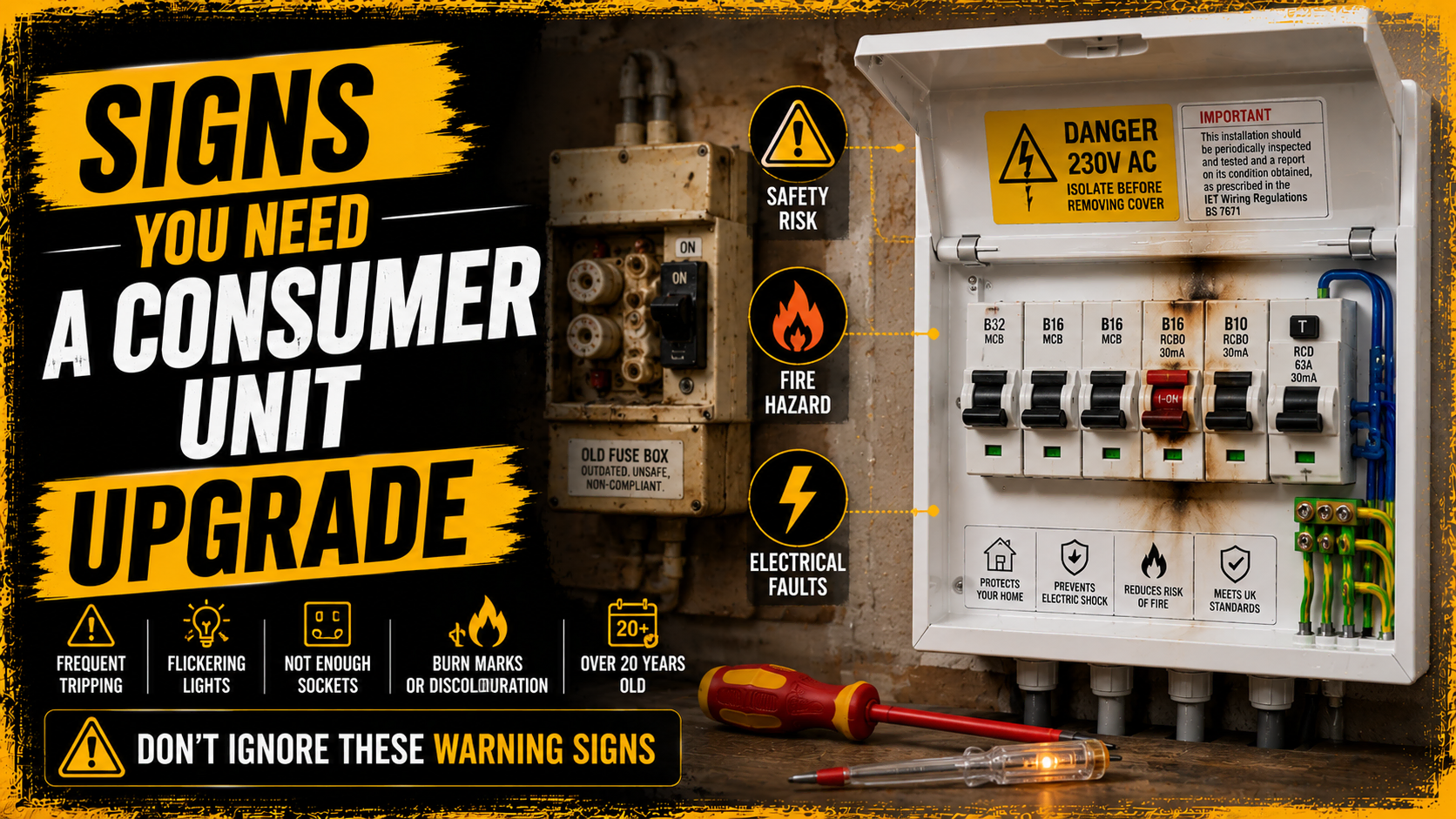

Most signs that your consumer unit needs attention aren’t emergencies. A couple of them genuinely are. Knowing which is which matters more than the list itself treating a routine warning sign like a crisis wastes your time, and treating a genuine one like a routine job is the mistake that actually matters.
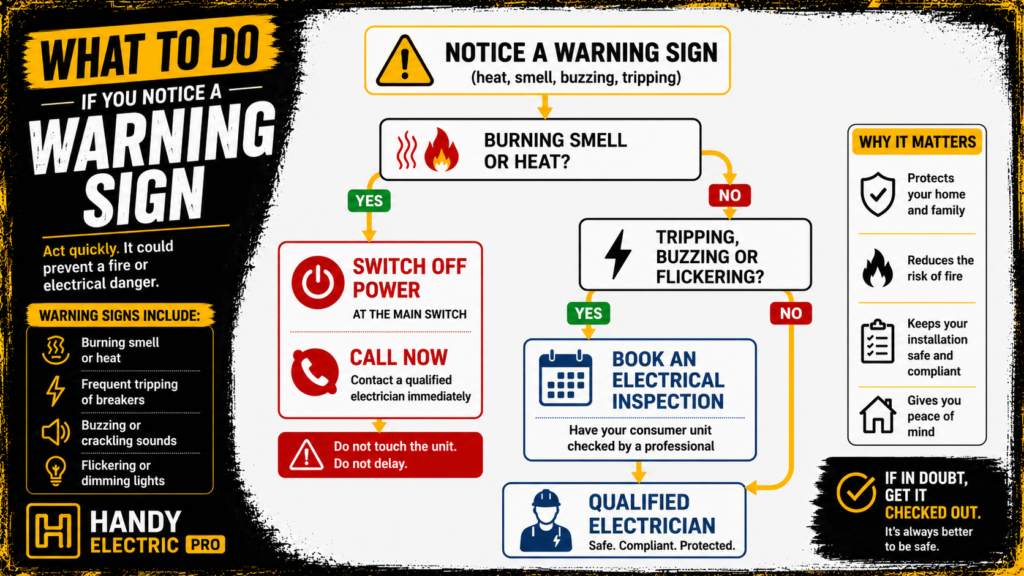
3 Signs That Mean Stop and Call Someone Now
1. A burning smell from the consumer unit. Not a faint, occasional whiff a real, persistent smell of something hot or burning coming from the board itself. This is the clearest single warning sign there is.
2. Scorch marks, melting, or visible heat damage. Discoloured plastic, a melted switch, or black marks around a breaker mean heat has already built up somewhere it shouldn’t have.
3. The board feels hot to touch, or you see sparking. A consumer unit should feel the same temperature as the wall it’s mounted on. Genuine heat, or any visible spark, is not something to wait out.
If any of these apply, switch off at the main isolator if it’s safe to reach, and call a professional straight away not book an appointment for next week. This isn’t us being cautious for the sake of it; a live fault at this stage is a fire risk, not a maintenance item.
4 More Signs Worth Booking an Inspection For
4. Breakers tripping repeatedly, not just once. A single trip with an obvious cause (an overloaded extension lead, a faulty appliance) is normal. Repeated, unexplained trips point to something in the board or the wiring behind it, not the thing you happened to be using at the time.
5. Buzzing, humming, or crackling from the unit. A consumer unit should be silent. Any consistent noise usually means a loose connection working itself looser, which is worth catching before it becomes sign #2 or #3 above.
6. Rewirable fuses or ceramic cartridge fuses instead of switches. If a “blown fuse” means physically replacing wire or a cartridge rather than flipping a switch back up, the board predates the protection modern circuits are built around. Our old fuse box vs consumer unit guide covers exactly what’s different and why it matters.
7. No RCD or RCBO protection that you’re aware of. If nothing on your board trips in response to an earth fault only overloads there’s a real gap in protection for people, not just wiring. Our breakers guide explains what RCD and RCBO protection actually does if you want the full picture.
None of these four need a same-day emergency callout. All four are genuine reasons to get the board looked at rather than wait for it to become one of the first three.
A Few More Worth Knowing About
A handful of other signs are real, if slightly less urgent to act on immediately: a wooden or plastic-cased board (not compliant for new work since 2016, though not automatically unsafe if it’s older), a board that’s full with no spare ways for anything new, or one that simply hasn’t been inspected in a decade or more. Our small consumer units guide covers sizing and spare capacity if that’s the specific concern.
The AFDD Detail Landlords Should Know About
If you let a property that’s an HMO, purpose-built student accommodation, or a care home, there’s a specific, mandatory requirement worth knowing: since 2022, socket circuits in these property types must have arc fault detection (AFDD), not just RCD protection, under BS 7671 Amendment 2. For an ordinary single-let home, this remains a recommendation rather than a requirement but for the property types above, it isn’t optional, and it’s a genuine reason a board might need attention even if nothing on this list looks obviously wrong.
Every inspection and upgrade we carry out is completed by ECS/JIB-certified, City & Guilds-qualified electricians, fully insured and DBS-checked.
Frequently Asked Questions
How do I know if my consumer unit is dangerous?
Burning smells, scorch marks, heat, or visible sparking are the clearest signs of an urgent problem. Repeated tripping, buzzing, or a lack of RCD protection are real warning signs too, just not emergencies on their own.
Can I just replace one breaker instead of the whole board?
Sometimes, if the board is otherwise modern and only one component has failed. If several signs are present together, particularly on an older board, a full upgrade is usually the safer and more cost-effective route, since it’s addressed properly once rather than patched repeatedly.
Is a buzzing consumer unit an emergency?
Not immediately, but it shouldn’t be ignored. A consistent noise usually points to a loose connection that’s worth catching before it develops into heat or sparking.
Do I need to replace an old consumer unit even if it still works?
Not automatically. If it’s passing inspection and nothing notifiable is being done to it, an older but functioning board isn’t necessarily an emergency. Our regulations guide covers what actually triggers a requirement to upgrade versus what’s simply advisable.
What should I do if I smell burning from my consumer unit?
Switch off at the main isolator if it’s safe to reach, and call a professional immediately. Don’t wait for a scheduled appointment.
Are AFDDs required in a normal home?
No, not currently they’re recommended for ordinary domestic properties, but mandatory specifically for HMOs, student accommodation, care homes, and higher-risk residential buildings.
How much does a consumer unit upgrade cost?
It depends on the board type and what’s driving the upgrade. Our consumer unit replacement cost guide breaks down what typically affects the price.
Will an electrician tell me if my board doesn’t actually need replacing? Yes — a proper survey identifies what’s actually wrong, not just what’s old. Plenty of boards get a clean bill of health, or need a smaller fix rather than a full replacement.
Noticed One of These Signs?
Get in touch for a free survey and a fixed quote same-day options available if what you’re describing sounds urgent, no obligation either way if it doesn’t.
Book Online